

The Memorial Story
From tragedy to reconciliation
The story of Myall Creek did not finish in 1838.
More than a century later, people began working to ensure the events that happened here would not be forgotten. The creation of the Myall Creek Memorial became a powerful act of truth-telling, healing and reconciliation.
Today the Memorial stands near the site of the massacre — a place where visitors can learn, reflect and remember.
The beginning of the Memorial
The idea for a Memorial was first proposed in 1965 by Bingara resident Len Payne, who believed those who died at Myall Creek should be remembered.
For many years he returned to Myall Creek each June, laying wreaths and keeping alive the hope that one day a Memorial would be built.
In 1998, descendants of the massacre victims and members of the local community gathered at a conference hosted by the Uniting Church. From that meeting the Myall Creek Memorial Committee was formed and plans began to create a permanent Memorial.
A Memorial built together
The Memorial was created through collaboration between Aboriginal and non-Aboriginal people, including descendants of both the victims and perpetrators.
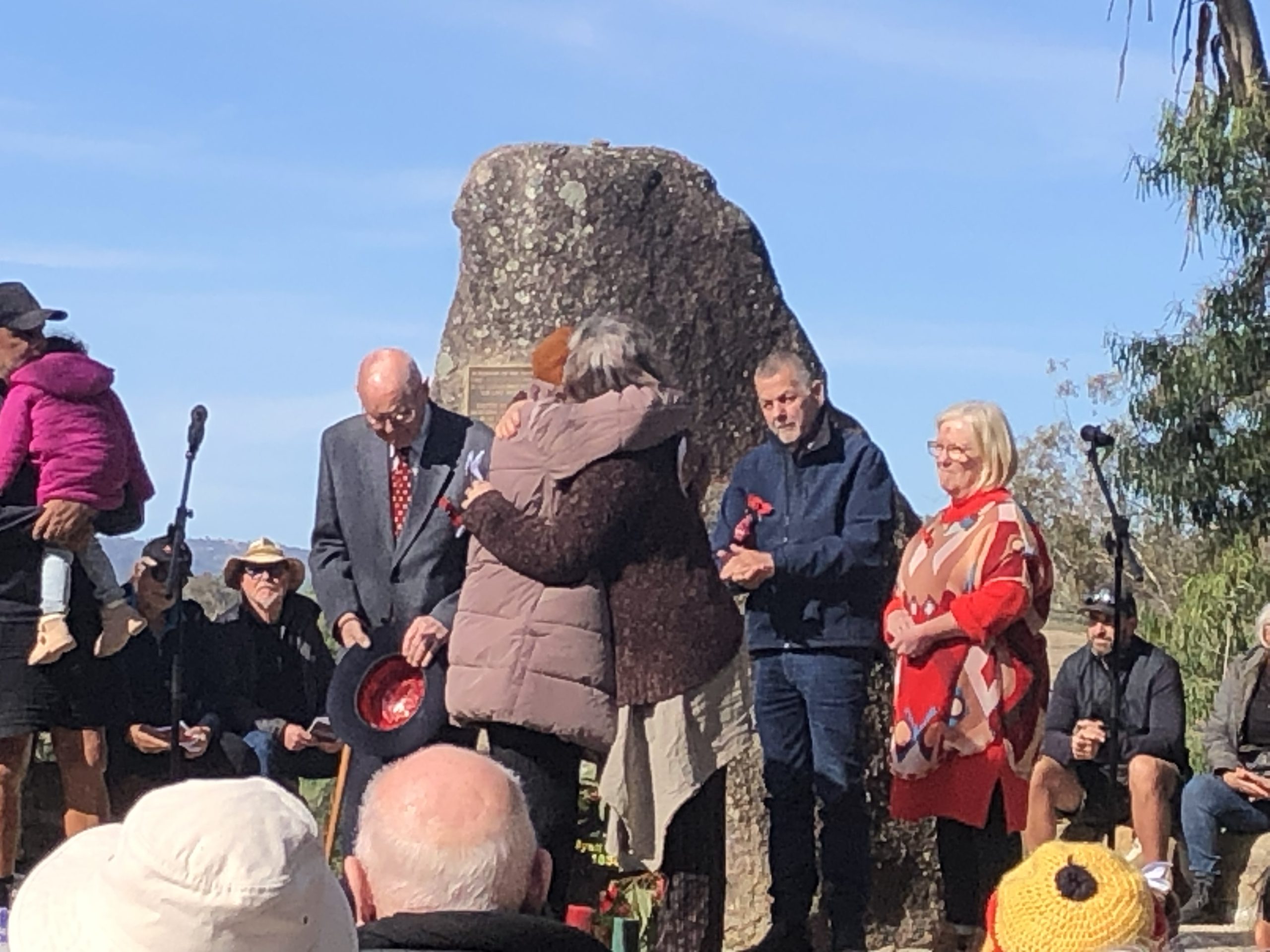
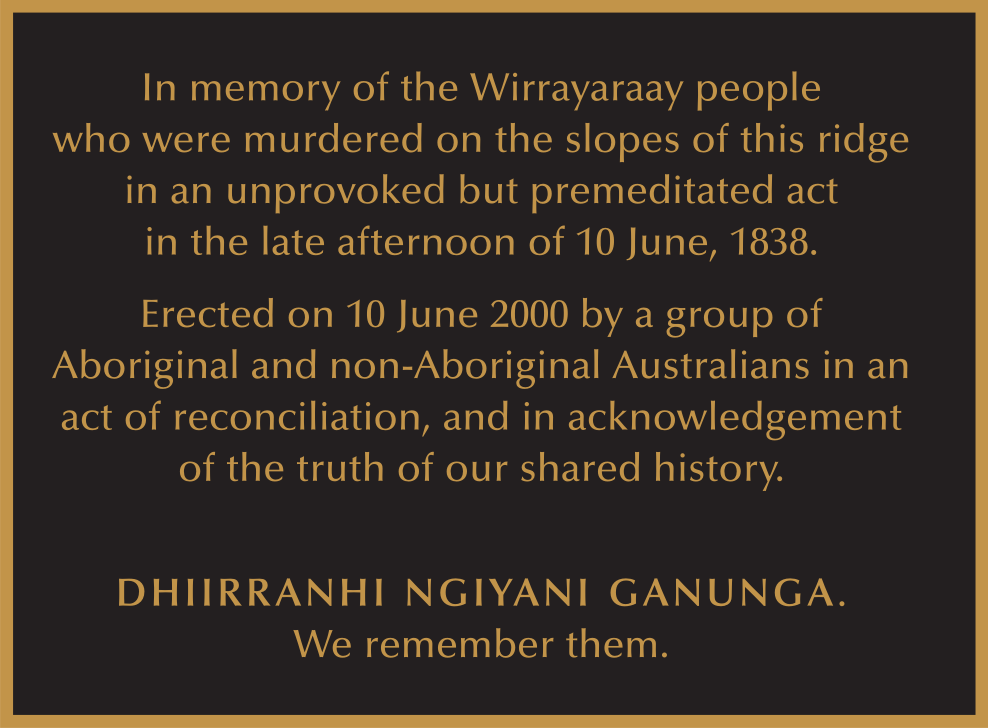
When the Memorial opened on 10 June 2000, 162 years after the massacre, it marked a deeply moving moment. Descendants met, embraced and walked the Memorial path together — a powerful step toward reconciliation.
The Memorial walk
Visitors approach the Memorial along a winding walkway designed to reflect the path of the Rainbow Serpent, the Creator Spirit in Aboriginal culture.
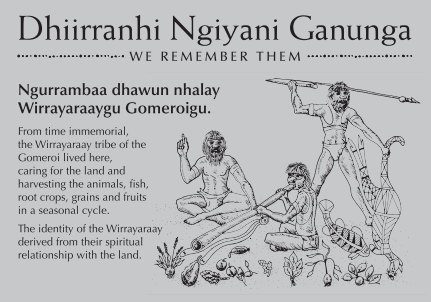
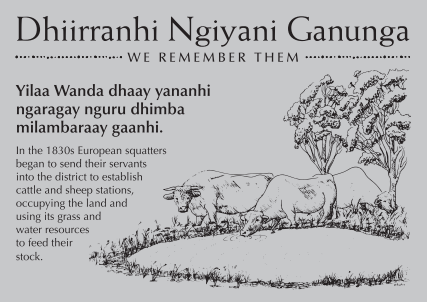
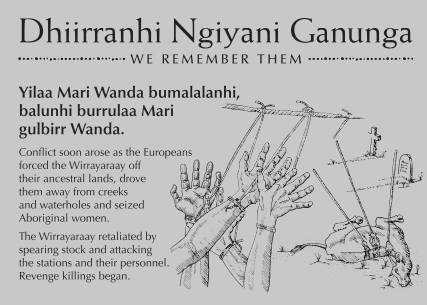
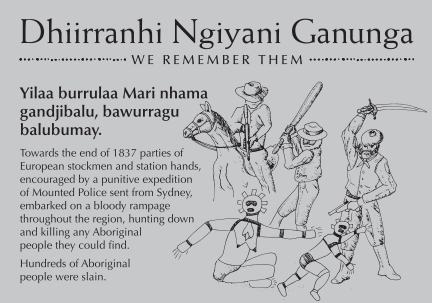
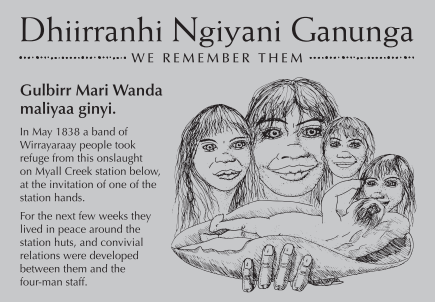
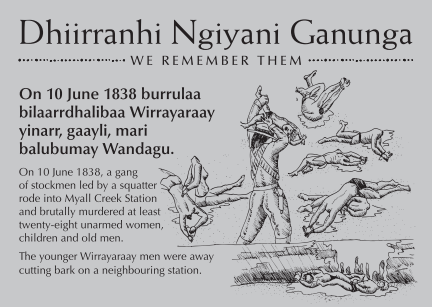
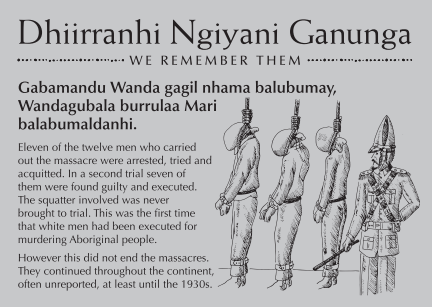
Along the path are a series of plaques telling the story of the land, the people who lived here, the arrival of settlers, and the tragic events of 1838.
At the end of the walk stands the Memorial rock, overlooking the massacre site.
- The red gravel path symbolises the blood shed in the massacre.
- White granite surrounding the rock represents mourning in Aboriginal culture.
Growing the Memorial precinct
The Memorial continues to grow as a place for education and cultural exchange.
Stage 1 – Memorial Walk (2000)
The original Memorial path and granite rock overlooking the massacre site.
Stage 2 – Cultural Space (2021)
An outdoor amphitheatre, Aboriginal garden, shade shelters and visitor facilities were added to create a place for gatherings, storytelling and cultural performance.
Stage 3 – Education and Cultural Centre (Proposed)
Plans are underway for a future centre that will provide exhibitions, learning programs and cultural experiences focused on truth-telling and reconciliation.
This centre aims to become a place where people can learn about the Myall Creek massacre, understand the impact of the frontier wars on Aboriginal communities, and explore pathways toward reconciliation.
A place to remember
Each year people gather here for the Myall Creek Commemoration, walking the Memorial path together and remembering those who lost their lives.
Today the site is listed on both the NSW State Heritage Register and the National Heritage List, recognising its importance in Australia’s history.
Myall Creek stands as a place where the truth of the past is acknowledged — and where the journey toward reconciliation continues.